
Bhide Laboratory Services

Microbiology Diagnostics

Accurate Identification. Targeted Treatment. Better Infection Control.
OPERATIONAL STANDARDS

What makes us different?

What is Microbiology?

Microbiology is the branch of laboratory medicine that helps detect and identify microorganisms responsible for infections, including bacteria, fungi, parasites, and certain viruses. It plays a crucial role in diagnosing infections, guiding antibiotic therapy, monitoring treatment response, and supporting infection control.

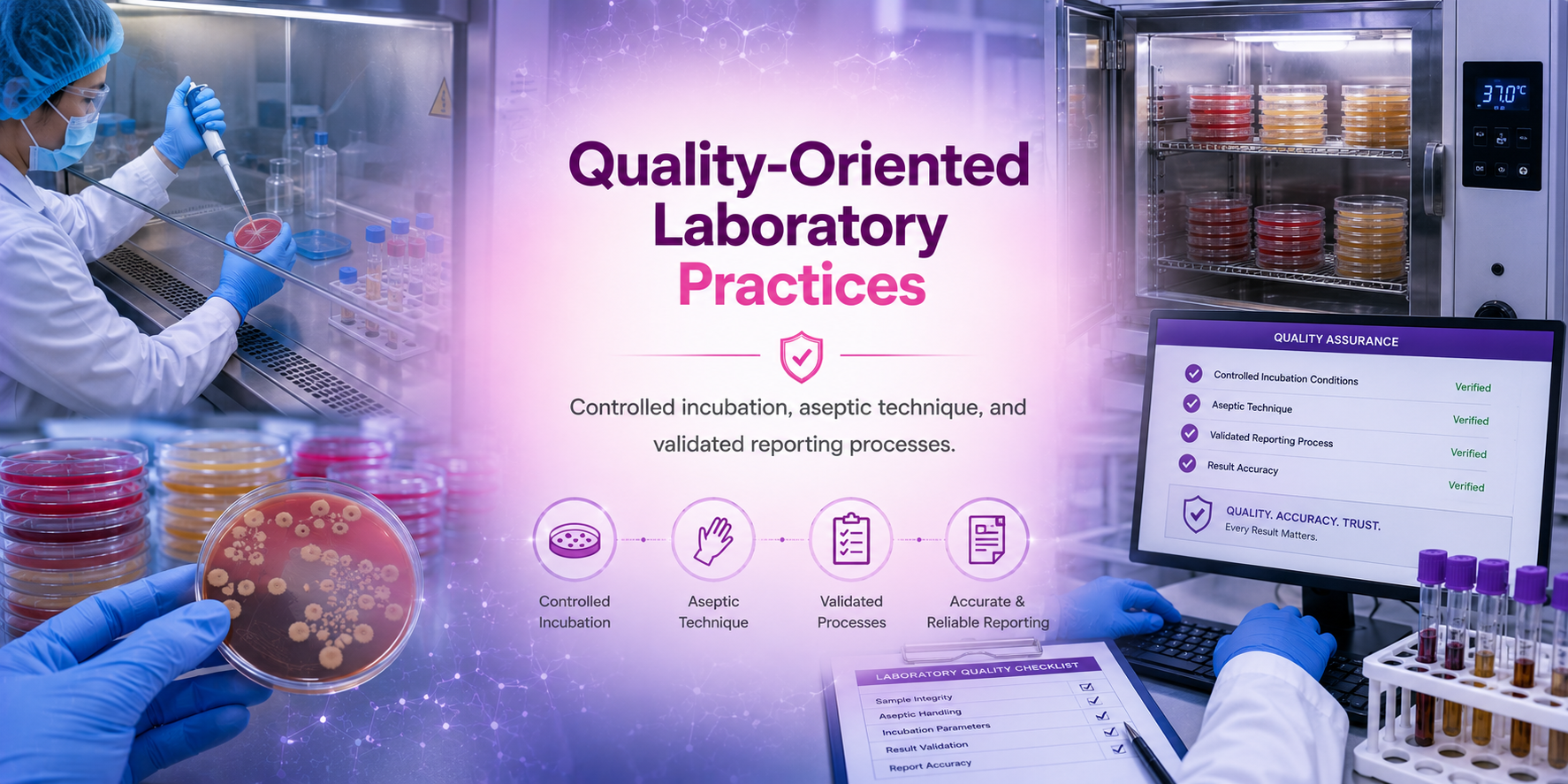
At Bhide Lab, our Microbiology Department is designed to support clinicians with reliable, timely, and clinically meaningful reports for routine and specialized infection-related investigations.

MEDICAL DEMYSTIFIED

Often Heard of the Terms Culture & Sensitivity Report?

Let’s decode what they really are—and see why they form the baseline of custom infection therapeutics.

Culture Testing

Culture Testing

ORGANISM CULTIVATION

Culture Testing is a laboratory method used to detect and grow microorganisms from patient samples such as urine, blood, pus, sputum, stool, body fluids, swabs, and other clinical specimens.

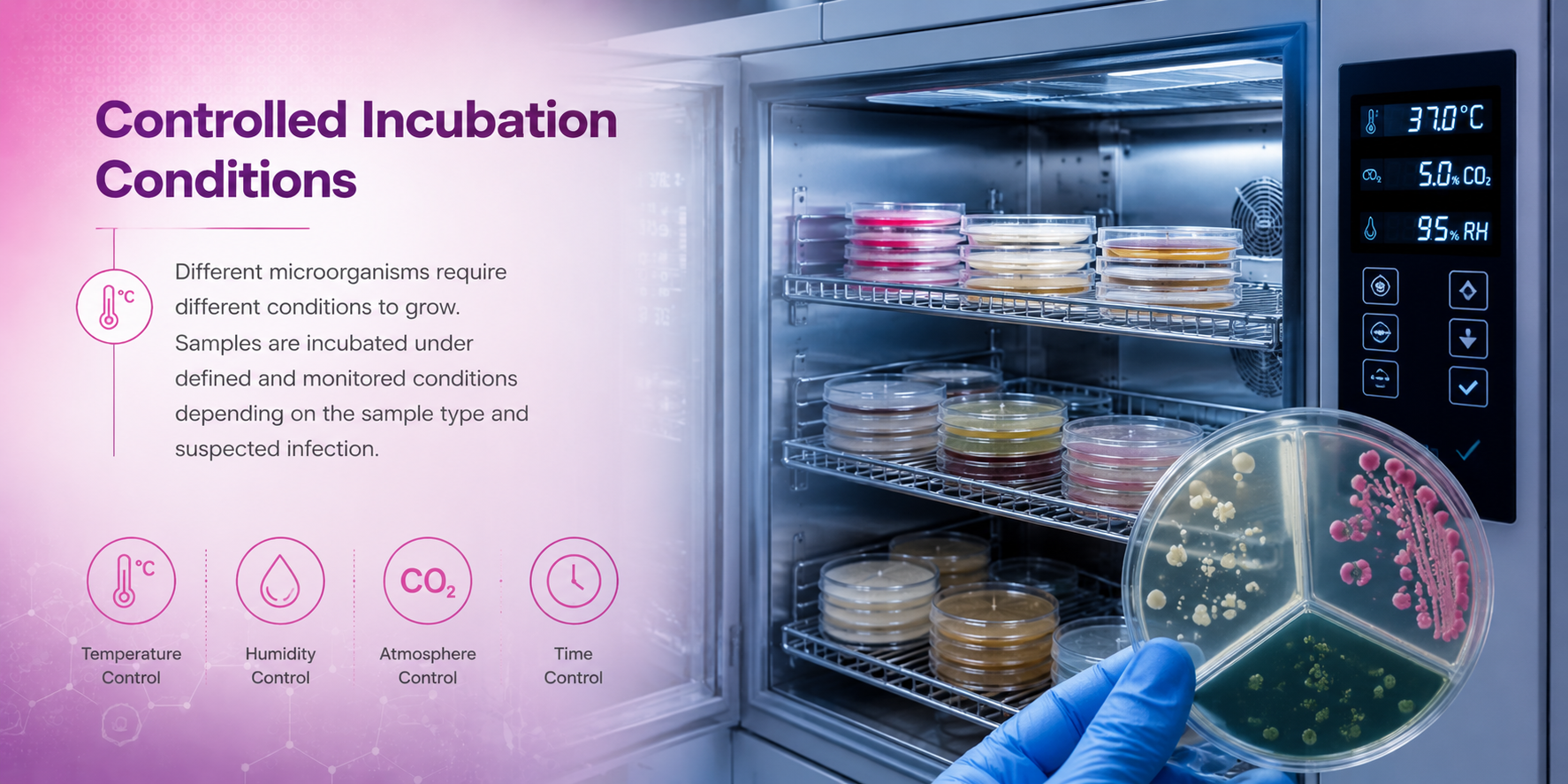
The sample is placed on special culture media and incubated under controlled conditions. If microorganisms are present, they grow into visible colonies, which are then identified using standard microbiological methods.

WHAT MAKES CULTURE SO IMPORTANT:

1. Is an infection present?

It helps confirm whether microorganisms are growing in the sample.

2. Which organism is causing the infection?

The test identifies the bacteria or fungus responsible.

3. Which antibiotic will work best?

This is determined through Antibiotic Sensitivity Testing (AST).

Antibiotic Sensitivity

Antibiotic Sensitivity

SUSCEPTIBILITY ASSAY (AST)

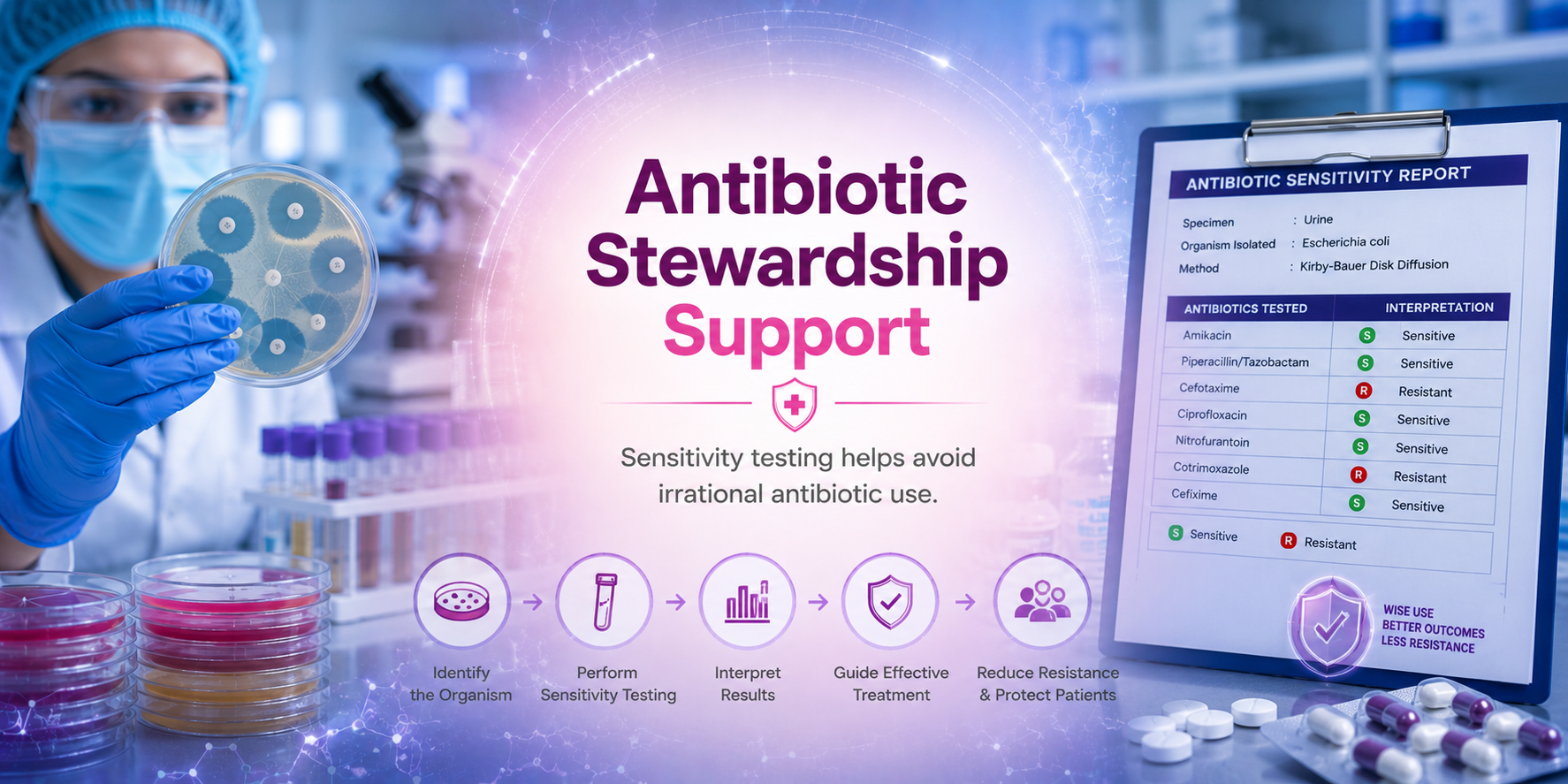
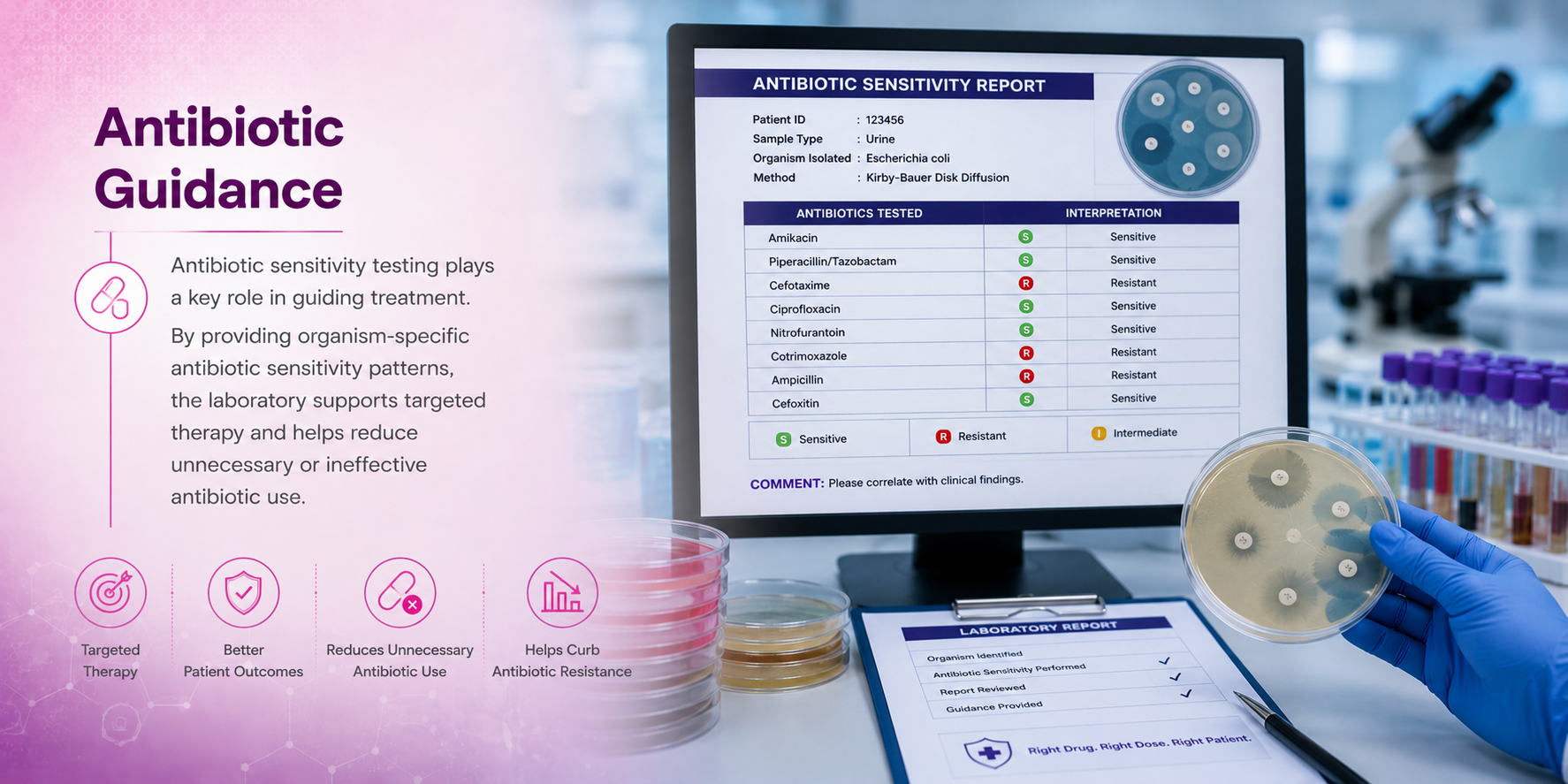
Antibiotic Sensitivity Testing, also known as Antimicrobial Susceptibility Testing, helps determine which antibiotics are likely to be effective against the microorganism causing the infection.

This test supports doctors in choosing the most appropriate antibiotic and helps reduce unnecessary or ineffective antibiotic use.

ANTIBIOTIC SENSITIVITY REPORTS MAY HELP IN:
1 Selecting the right antibiotic
2 Avoiding treatment failure
3 Reducing antibiotic resistance
4 Managing recurrent infections
5 Supporting hospital infection control practices
WORKFLOW

Microbiology Workflow

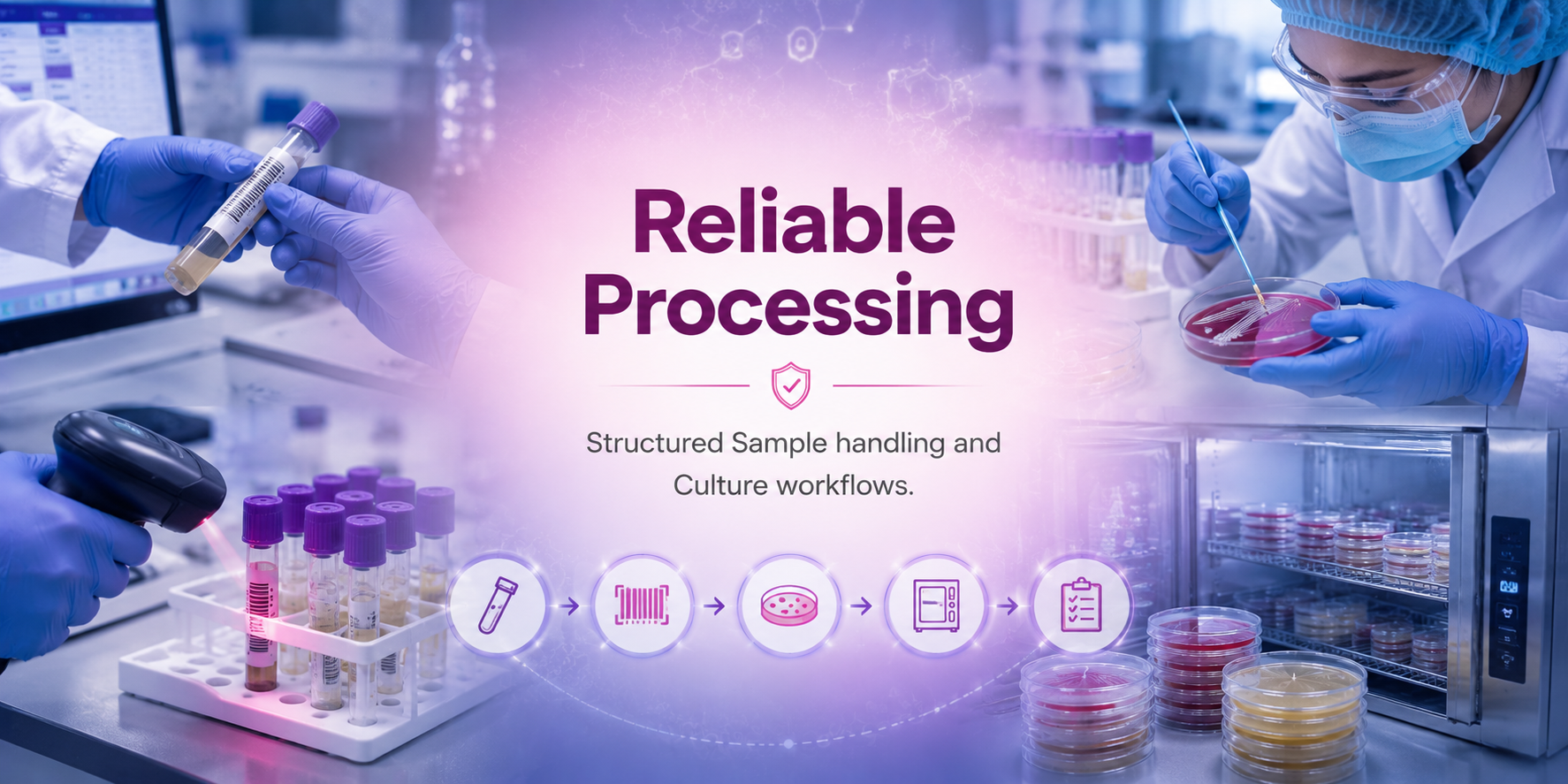
Explore the step-by-step laboratory process—from sample collection and culture identification to antibiotic sensitivity testing and final reporting.

Sample
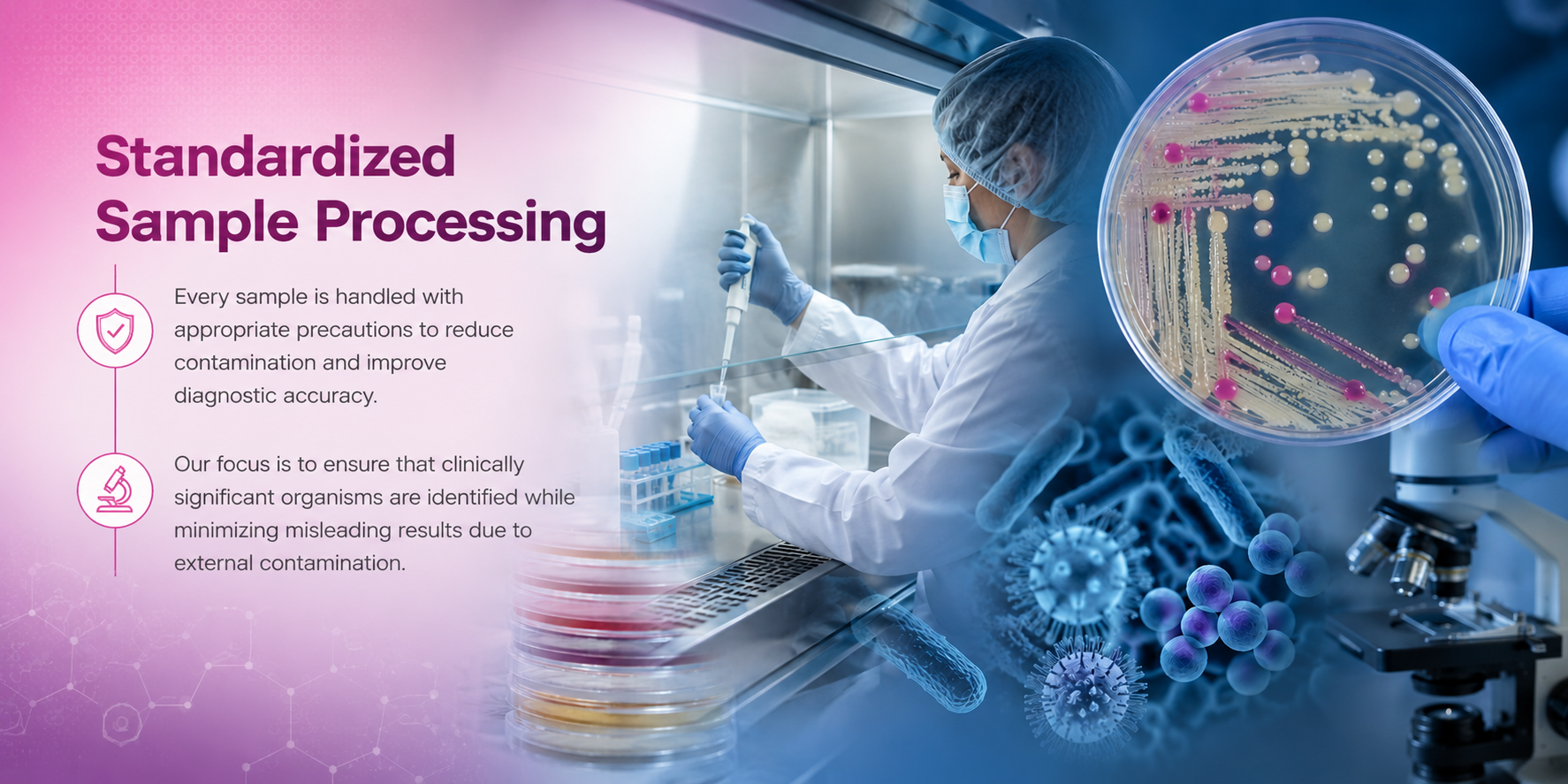
Processing

Microscopy

Culture
Inoculation

Incubation

Organism
Identification

Antibiotic
Sensitivity

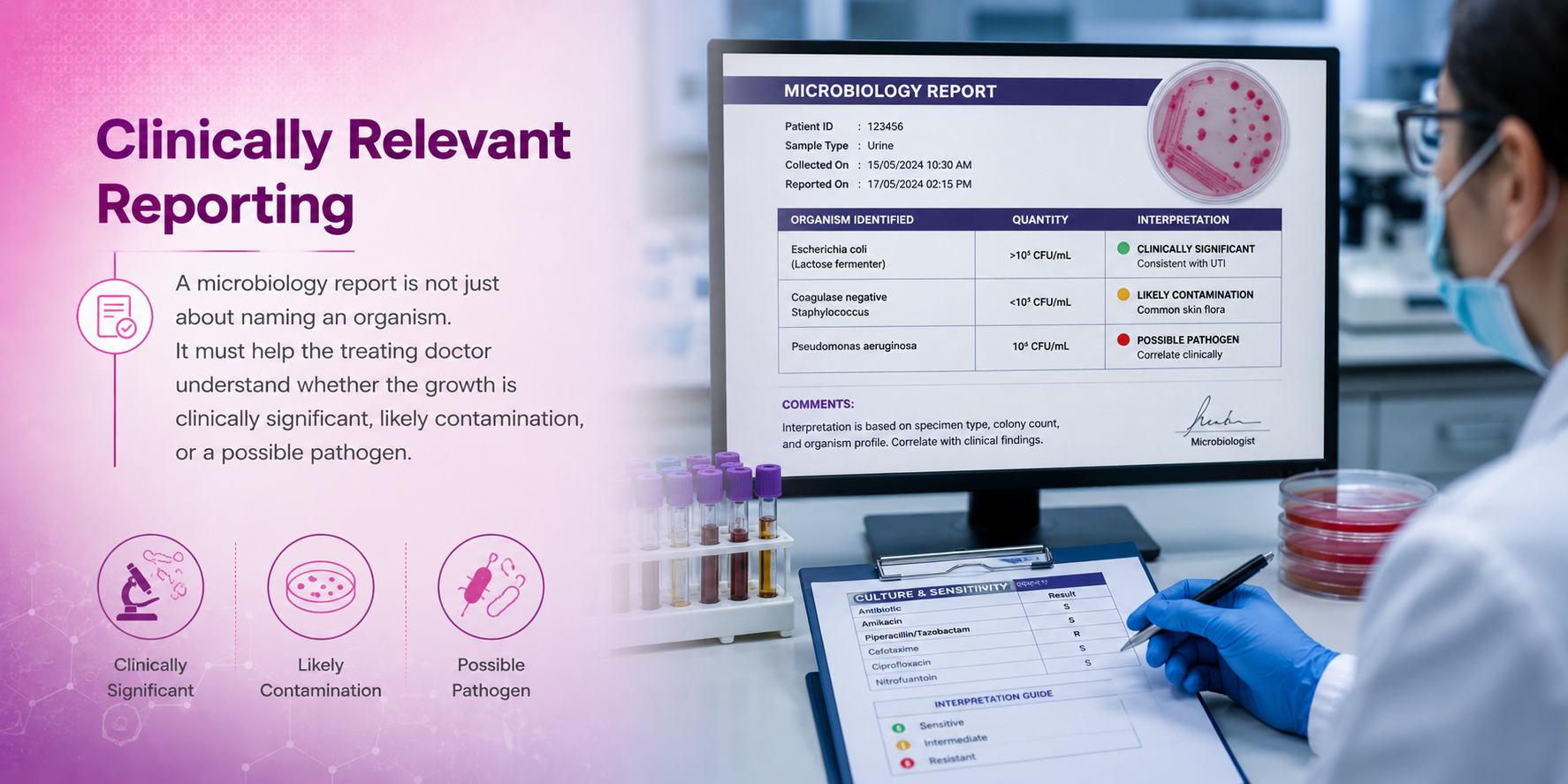
Report
Validation

CLINICIAN AFFIRMED

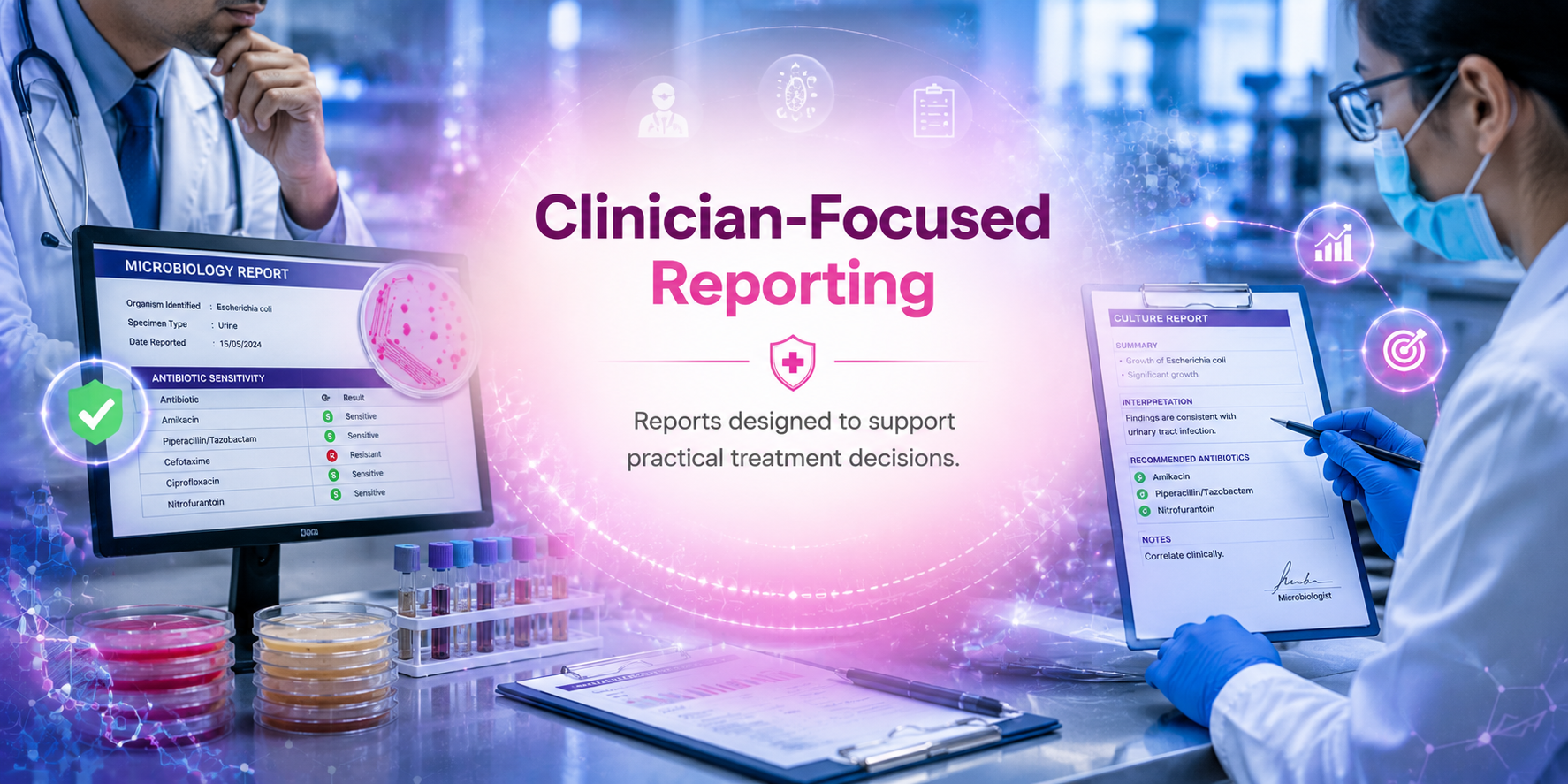
Why Doctors Trust Our Culture Reports?

Need Microbiology Support?

We are only a click away.

Contact us today!